Winter weather in the United States brings a specific set of challenges for every property owner. Selecting the right tools to manage these conditions is the only way to ensure safety and accessibility throughout the season.
How to Choose the Right De-icing Product
Picking a de-icer is not just about grabbing the first bag of salt you see at the local hardware store. You have to think about the typical temperatures in your area and the specific surfaces you need to protect.
Traditional rock salt is a common choice because it is affordable and easy to find in bulk. It works by lowering the freezing point of water, but it loses effectiveness once the temperature drops below 15 degrees.
If your region faces deep freezes, you might need to look at calcium chloride or magnesium chloride instead. These products generate heat as they dissolve, allowing them to melt ice in much colder environments than standard salt.
Understanding Different Chemical Compositions

Sodium chloride is the technical name for rock salt and serves as the baseline for most winter maintenance. It is highly effective for large parking lots when the weather stays relatively mild.
Calcium chloride is often viewed as the heavy hitter of the de-icing world. It can melt ice at temperatures as low as negative 25 degrees, making it a reliable partner during extreme cold snaps.
Magnesium chloride is a popular middle ground for many residential and commercial owners. It is less corrosive than rock salt and generally safer for use around pets and sensitive landscaping.
Considering the Impact on Surfaces
Concrete and asphalt react differently to various melting agents over time. Rock salt can lead to a cycle of freezing and thawing that creates small cracks in your pavement.
Older concrete is especially prone to damage from harsh chemicals. If your walkways are new or made of decorative stone, you should prioritize products that are labeled as surface-safe.
Liquid de-icers are becoming a more popular alternative for professional applications. These solutions are often sprayed on before a storm to prevent ice from bonding to the ground in the first place.
Evaluating Environmental and Pet Safety

Many property owners are now looking for ways to reduce their environmental footprint during the winter months. Runoff from heavy salting can eventually reach local waterways or damage the grass along your driveway.
Acetates are a specialized class of de-icers that do not contain chlorides. While they are more expensive, they are much kinder to the soil and nearby vegetation.
Pet safety is another major factor if you have dogs or cats walking on treated areas. Look for rounded pellets that won’t get stuck in paws or formulas that are free of toxic additives.
Application Tips for Maximum Efficiency
Applying too much product is a mistake that many people make when they see a layer of ice. You only need a thin, even layer to break the bond between the ice and the pavement.
Using a broadcast spreader helps ensure that the material is distributed correctly across the entire surface. This prevents piles of salt from sitting in one spot and causing unnecessary wear on your concrete.
Timing your application can save you a lot of manual labor and money. Putting down a light layer of de-icer just before the snow starts falling prevents a thick sheet of ice from forming underneath.
Comparing Costs and Long-Term Value
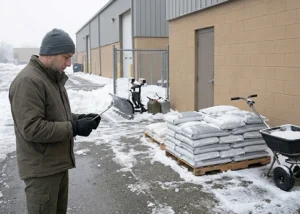
Budget is always a concern when you are managing a large property or a commercial site. Rock salt is almost always the cheapest option upfront, but the hidden costs can add up quickly.
Replacing damaged concrete or dead shrubs can be far more expensive than buying a premium de-icer. Investing in a higher-quality product often leads to better results with less total material used.
Buying in bulk before the first major storm hits is the best way to secure lower prices. Once a blizzard is in the forecast, supply usually drops and prices at the store tend to spike.
Storage and Handling Requirements
De-icing products need to be stored in a cool, dry place to prevent them from clumping together. Moisture is the enemy of any melting agent, as it can turn a bag of pellets into a solid block.
If you are using liquid de-icers, you need specialized tanks that can handle the weight and chemical properties of the solution. Always keep your supplies tightly sealed to maintain their chemical potency for the next storm.
Safety gear is also important when you are handling large amounts of these materials. Gloves and eye protection prevent irritation from the dust and chemicals found in many commercial-grade products.
Knowing When to Call the Professionals
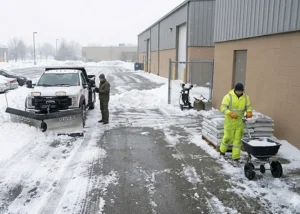
Managing ice on a small sidewalk is one thing, but a large commercial lot is a different story. Professional teams have access to high-grade equipment and specialized blends that aren’t sold in retail stores.
A professional service can monitor the weather and apply treatments exactly when they are needed. This proactive approach keeps your property safe for visitors and reduces your liability during the winter.
If you find yourself struggling to keep up with the ice, it might be time to look for a reliable partner. Experts can create a custom plan that balances safety, cost, and environmental protection for your specific needs.
Select the Best Protection
Choosing the right product ensures your property remains safe for everyone throughout the coldest months. Take the time to evaluate your surfaces and local weather patterns before the next big storm arrives.
Don’t wait for the ice to take over your property. Contact Charlotte Snow Plow today or call (844) 327-1986 for a professional de-icing and snow removal plan tailored to your needs!
Related Articles: