A patch of ice does not always begin with snow or freezing rain. Many dangerous slick spots are caused by drainage issues that lead to ice formation long after a storm has passed.
From Standing Water to Ice Hazards
Ice forms when water collects on a surface and the temperature drops below freezing. That sounds simple, but the source of the water is not always clear. It may come from melting snow, a blocked drain, a leaking downspout, or runoff from a higher section of the property.
During the day, sunlight and warmer air may melt snow piled around parking lots and sidewalks. The meltwater then travels across the pavement. When temperatures fall after sunset, that water can freeze into a thin layer that may be hard to see.
This cycle can continue for days after a storm. Crews may clear an icy patch in the morning, only to find it back the next day because the water source was never corrected.
Why Poor Drainage Becomes Worse in Winter
A drainage system has one basic job: move water away from areas where people walk or drive. In winter, that job becomes harder. Snow, leaves, sediment, and ice can block the normal path of runoff.
Frozen ground also absorbs less water. Instead of soaking into the soil, meltwater may flow over grass, curbs, and pavement. If it reaches a low spot, it can settle there and freeze.
Winter weather also exposes small flaws that may go unnoticed during warmer months. A shallow pavement dip may hold only a little water in summer, but that same water can create a slick patch in winter.
Clogged Storm Drains and Catch Basins
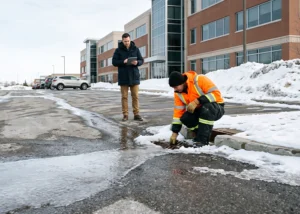
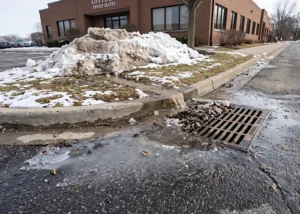
Storm drains and catch basins often become blocked by leaves, litter, gravel, and packed snow. When water cannot enter the drain, it spreads across the nearby surface. This can affect parking spaces, travel lanes, loading areas, and pedestrian routes.
A plow may also push snow over a drain without the operator realizing it. As the snowbank melts, the water has nowhere to go. It may pool around the drain and freeze overnight.
Watch for these warning signs:
- Standing water near a drain after rain or snowmelt
- Ice forming in the same area each morning
- Debris covering the drain grate
- Water flowing around the drain instead of into it
- Thick ice building near curbs or parking spaces
Drain openings should be checked before winter and after major storms. Clearing snow from the grate can also help meltwater enter the system instead of spreading over the lot.
Poor Pavement Grading
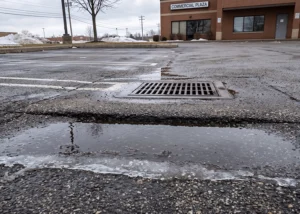
Parking lots, roads, and sidewalks should have enough slope to guide water toward a drain or safe runoff area. If a surface is too flat, water may remain in place. If it slopes in the wrong direction, runoff may travel toward a doorway, curb ramp, or walkway.
Grading problems can be present from the day a surface is installed. They can also develop as pavement settles or soil shifts beneath it. Heavy vehicles may create ruts that hold water along their wheel paths.
Federal highway guidance notes that ruts, ridges, and uneven pavement can retain water. When temperatures drop, that trapped water can freeze and reduce traction.
Minor low spots may sometimes be repaired with a surface patch. Larger grading problems may require milling, resurfacing, or work on the base beneath the pavement.
Snow Piles Placed in the Wrong Areas
Plowed snow has to go somewhere, but the chosen location matters. A snow pile placed uphill from a walkway or beside a busy entrance can create ongoing drainage problems as it melts.
Water follows the slope of the property. If a snow pile sits above a parking aisle, its runoff may cross the driving surface each afternoon. That wet strip can become black ice after dark.
Avoid placing snow piles:
- Over or directly beside storm drains
- Uphill from building entrances
- Next to accessible parking spaces
- Along busy pedestrian routes
- Where runoff must cross a driving lane
- Against curbs that block the flow of water
A snow storage plan should be prepared before the first storm. The safest location allows meltwater to reach a working drain without crossing high-traffic areas.
Blocked Gutters and Misplaced Downspouts
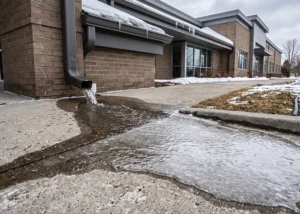
Roof drainage can create ice far from the roof itself. When gutters are clogged, water may spill over the edge and land beside entrances or walkways. During freezing weather, that runoff can create ice on steps, sidewalks, and loading zones.
Downspouts can cause the same problem when they empty onto paved surfaces. Even a small flow can form a large patch of ice after several freeze-and-thaw cycles.
Downspout extensions can direct water toward a lawn, drainage channel, or approved collection point. However, the new discharge area must also be checked. Moving water from one sidewalk to another does not solve the problem.
Gutters should be cleaned before winter, and loose or damaged sections should be repaired. Property managers should also inspect the ground below each downspout after rain or melting snow.
Frozen or Damaged Drainage Pipes
Some drainage trouble happens below the surface. A pipe may be crushed, filled with sediment, blocked by roots, or frozen. Water can then back up through a drain or collect around its opening.
A frozen pipe is more likely when water remains inside because of a blockage or poor slope. Once the water freezes, additional runoff cannot pass through. The backup may continue until the pipe thaws.
Signs of a pipe problem may include slow drainage, unusual bubbling, water returning through an inlet, or wet areas that appear without a clear surface source. A drainage contractor may need to inspect the line with a camera or flush out the blockage.
Snowbanks Blocking Normal Runoff
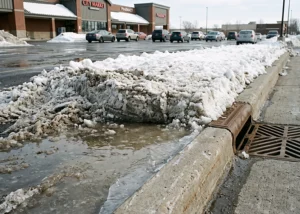
Curbs and gutters often serve as channels that guide water toward storm drains. A packed snowbank can act like a temporary wall and stop that flow. Meltwater then becomes trapped between the snow and the pavement.
This problem is common along parking lot edges and road shoulders. It can also happen at the ends of driveways, where plowed snow blocks the normal route of water.
Crews may need to cut small drainage paths through snowbanks. These paths should guide water toward a safe outlet without sending it across a sidewalk or entrance.
As piles shrink, the routes may change. Drainage should therefore be reviewed throughout the season, not only after the first storm.
Leaks From Outdoor Fixtures and Building Systems
Not every winter ice patch comes from the weather. Outdoor faucets, irrigation lines, HVAC equipment, and plumbing systems can release water throughout the season. A slow leak may be easy to overlook until it freezes.
Heating and cooling equipment may also produce condensate. If a drain line empties near a sidewalk or driveway, it can create a steady ice problem whenever temperatures fall.
Look for water that appears during dry weather. This often points to a leak or mechanical source rather than snowmelt. Once the source is found, the line should be repaired or redirected to a proper drain.
Landscape Features That Send Water Toward Pavement
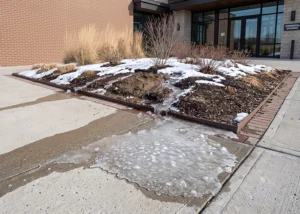
Landscaping can change how water moves across a property. Raised planting beds, compacted soil, edging, and poorly placed berms may direct runoff toward paved areas. Overgrown vegetation can also block shallow drainage channels.
Soil may settle near sidewalks and foundations over time. This creates a slope that sends water toward the building instead of away from it. During winter, that water may freeze beside doors, stairs, or ramps.
Landscape drainage should be reviewed during fall maintenance. Corrective work may include regrading the soil, clearing swales, adjusting edging, or installing a suitable drain.
Cracks, Potholes, and Depressed Pavement
Cracks and potholes collect water, making them likely places for ice to develop. Water can also enter the pavement through cracks and weaken the material below. As it freezes and expands, the damage may grow.
This repeated freeze-and-thaw process can turn a small defect into a larger repair. It can also leave loose pavement around the icy area, adding a trip hazard.
Before winter, property owners should arrange repairs for:
- Potholes in vehicle and pedestrian areas
- Cracks that collect or channel water
- Sunken pavement near drains
- Broken curbs that interfere with runoff
- Uneven patches that create shallow pools
Prompt repairs help reduce both ice formation and further pavement damage.
Why Salt Alone May Not Solve the Problem
Salt and other deicing products can help break the bond between ice and pavement. They are useful tools, but they do not repair poor drainage. If water continues to reach the same area, ice may keep returning.
Repeated applications may also become less effective during very cold weather. Product choice, pavement temperature, application rate, and timing all affect the result.
Anti-icing treatment works best as part of a larger winter plan. Drainage repairs control the water source, while pretreatment and deicing help manage the surface during changing conditions.
How to Find the Source of Repeat Ice
A repeat ice patch should be treated as a clue. Its shape and location can reveal where the water originates.
Start by inspecting the area during daylight, when snow is melting. Follow the wet trail uphill or toward the nearest snow pile, downspout, drain, or equipment line.
Use this process:
- Mark the icy area. Note its size, shape, and exact location.
- Check the slope. Look for higher ground that may be sending water toward it.
- Inspect nearby drains. Remove visible snow and debris from the grate.
- Review snow placement. See whether a pile is releasing water across the pavement.
- Examine roofs and downspouts. Look for overflow or discharge onto paved areas.
- Watch for dry-weather flow. Water without recent precipitation may signal a leak.
- Document the pattern. Take photos at different times to show how the area changes.
Some problems become clear only during a thaw. Routine observation can reveal more than an inspection performed when everything is frozen.
Steps to Reduce Ice Caused by Drainage Problems
Prevention begins before temperatures drop. Drainage systems should be inspected while they are still easy to access and repair.
A practical winter drainage plan should include:
- Cleaning gutters, catch basins, and drain grates
- Repairing damaged downspouts and extensions
- Filling potholes and sealing major cracks
- Correcting low spots that hold water
- Clearing leaves and sediment from drainage paths
- Planning safe locations for plowed snow
- Checking known trouble spots during every thaw
- Keeping treatment records for recurring icy areas
During a storm, crews should monitor more than snow depth. Pavement temperature, runoff, refreezing, and changing traffic patterns also affect when and where ice will form.
After plowing, entrances, curb ramps, shaded areas, and drains deserve another check. These locations often become hazardous after the main snow removal work is complete.
Keep Water Moving and Ice Under Control
The safest winter properties do more than remove snow.
They control where meltwater travels, address drainage defects, and watch for refreezing after the storm is over.
Don’t let recurring ice and slick spots become a winter safety concern. Call us at 844-327-1986 or contact us online to schedule reliable snow and ice management and create a proactive winter plan that keeps your property safe, accessible, and ready for whatever the season brings.
Related Articles:
- Snow Removal Equipment Explained: Trucks, Blades, and Spreaders
- Top 5 Snow Plowing Mistakes HOAs Make and How to Avoid Them
- Salt vs Brine: What Works Best for Charlotte’s Winter Roads and Lots?