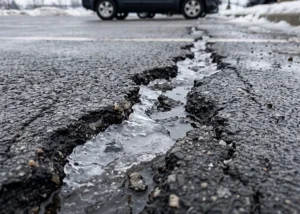
Winter pavement damage does not always begin with a major snowstorm. The freeze and thaw method can turn a small amount of water into hidden ice, deep cracks, and dangerous potholes over time.
Understanding Freeze-Thaw Cycles
For property owners, understanding this process makes it easier to prevent damage and keep driveways, sidewalks, roads, and parking lots safe throughout winter.
The freeze and thaw method describes what happens when water freezes, melts, and then freezes again. It is more commonly called the freeze-thaw cycle. The process may happen many times during a single winter.
It begins when rain, melted snow, or runoff enters small cracks and open spaces in pavement. As the temperature falls below 32 degrees Fahrenheit, the trapped water turns into ice and expands. This places pressure on the pavement around it.
When the weather warms, the ice melts and leaves a larger opening behind. More water can then enter that space. If the temperature drops again, the new water freezes and puts even more pressure on the pavement.
This cycle may seem minor at first. Yet each round of freezing and thawing can make existing damage worse.
How Water Gets Into Pavement
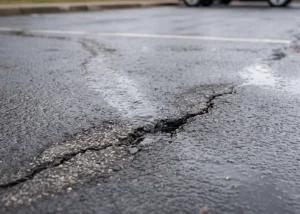
Pavements may look solid, but even a well-built surface can develop small openings. Sunlight, traffic, age, soil movement, and past weather can all create weak spots.
Water often enters through:
- Small surface cracks
- Gaps along curbs
- Broken pavement edges
- Unsealed joints
- Potholes
- Low areas with standing water
- Spaces around utility covers
- Areas where asphalt meets concrete
Some cracks are easy to see. Others may be too narrow to notice during a quick inspection. Water can still find its way inside.
Once moisture reaches the layers beneath the surface, the damage may spread beyond the original crack. The pavement base can become wet and weak, which reduces its ability to support vehicles.
How Freezing Water Damages Asphalt
Asphalt has some flexibility, but it is not immune to winter weather. When water freezes inside a crack, it pushes against the surrounding material. This can widen the crack and loosen nearby pieces of asphalt.
After the ice melts, traffic adds another source of stress. Tires press down on areas that may no longer have firm support beneath them. Over time, the weakened surface may sink, crumble, or break apart.
One freeze is not always enough to cause major damage. Repeated cycles create the larger concern. Each thaw allows more water to enter, and each freeze places added pressure on the pavement.
Eventually, a small crack may become a wide opening or pothole. What could have been a simple repair in the fall may become a costly project by spring.
How the Cycle Affects Concrete
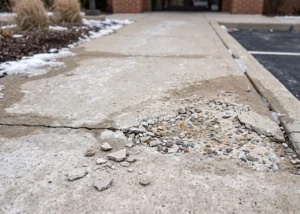
Concrete is strong, but it contains tiny pores that can hold moisture. Water may also enter through surface cracks, control joints, or damaged edges.
When that water freezes, it can place pressure within the concrete. Repeated freeze-thaw cycles may lead to scaling, flaking, cracking, or spalling. Spalling occurs when pieces of the concrete surface chip or break away.
Older concrete may face a greater risk, especially if it already has cracks. Poor drainage and standing water can also increase exposure.
Air-entrained concrete is made with small air spaces that give freezing water room to expand. This feature improves resistance, but it does not make the surface fully immune to winter damage.
Why Potholes Often Appear After Winter Weather
Potholes are often linked with harsh northern winters, but they can form anywhere temperatures move above and below freezing. The process usually starts below the pavement surface.
A common sequence looks like this:
- Water enters an existing crack or weak point.
- The temperature drops, causing the water to freeze and expand.
- The pavement is pushed outward or upward.
- Warmer weather melts the ice and leaves a gap.
- Vehicles pass over the weak area.
- Pieces of pavement loosen and break away.
- The opening grows as more water and traffic reach it.
Potholes can form quickly once the surface loses support. A small depression may become a tire-damaging hole after only a few busy days.
Parking lots and private roads are often at risk because they carry a mix of passenger vehicles, delivery vans, and heavy service trucks. Repeated traffic places extra force on already weak pavement.
The Safety Risks of Refreezing Water

Pavement damage is not the only problem caused by the freeze and thaw method. Melted snow and ice may flow across sidewalks, entryways, drive lanes, and parking spaces. If that water freezes overnight, it can create slick areas by morning.
Thin ice can be hard to see, particularly in low light. A surface may simply look wet even though it has become slippery.
These conditions can increase the risk of:
- Slip-and-fall injuries
- Vehicle skids
- Trouble entering or leaving parking spaces
- Blocked sidewalks and ramps
- Delivery delays
- Unsafe building entrances
- Damage to tires and wheels
Black ice is a serious concern because it blends into the pavement below. It often forms where drainage sends water across a travel path or where melted snow collects in a shaded area.
Prompt ice treatment helps reduce these risks. However, the source of the water should also be found and corrected when possible.
Signs of Freeze-Thaw Damage
Winter damage does not always appear as a large pothole. Early signs can be much smaller, and finding them soon may lower repair costs.
Watch for the following conditions:
- Cracks that become wider after cold weather
- Loose asphalt around an existing crack
- Small pieces of concrete near a walkway
- Surface flaking or rough patches
- Water collecting in low areas
- Sunken pavement
- Raised sections near cracks
- New potholes or depressions
- Crumbling pavement edges
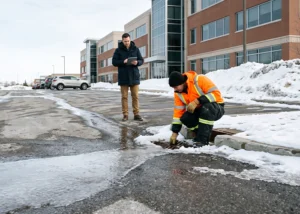
It is helpful to inspect the property after a winter storm and again when the surface has dried. Some cracks are easier to see once snow, ice, and standing water are gone.
High-traffic areas should receive close attention. Entrances, loading zones, intersections, and fire lanes may show damage sooner because they carry more weight.
Steps That May Reduce Freeze-Thaw Damage
Property owners cannot control the weather, but they can reduce the amount of water that enters and remains on pavement.
Repair Cracks Before Winter
Crack sealing helps block water from reaching the pavement base. Repairs should be completed while cracks are still small and the weather allows the material to bond properly.
Keep Drains and Gutters Clear
Leaves, trash, and ice can stop water from reaching a drain. Clear drainage routes allow melting snow to leave the property instead of pooling on the pavement.
Correct Poor Drainage
Standing water is a warning sign. Low spots, blocked channels, damaged curbs, or poorly placed downspouts may need attention. A drainage professional can help with larger problems.
Use Pretreatment When Appropriate
Pretreatment can reduce the bond between ice and pavement. It may also make snow and ice easier to clear after a storm begins. The correct product and application rate will depend on the weather and surface.
Remove Snow Promptly
Early removal limits compaction and gives crews more control over snow placement. It also reduces the amount of moisture left to melt and refreeze in traffic areas.
Inspect the Surface After Storms
A short inspection can reveal cracks, pooling water, blocked drains, and new pavement damage. Early action may stop a small problem from spreading.
Why Timing Matters for Winter Service
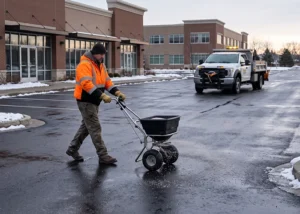
Winter conditions can change within a few hours. A wet parking lot in the afternoon may become an icy surface after sunset.
Waiting until ice has fully formed makes removal more difficult. It may also leave customers, residents, workers, and drivers exposed to unsafe conditions.
A scheduled winter service can help property owners respond at the right time. Weather conditions are monitored, and treatment can be planned around the needs of the property.
Timing is also important during extended storms. Plowing, deicing, and follow-up service may be needed at different points. One visit may not be enough when snow continues to fall or temperatures move above and below freezing.
Common Mistakes That Make the Problem Worse
Some winter habits can add to pavement damage or create more ice. One common mistake is pouring hot water over frozen pavement. The water may melt the ice for a short time, but it can refreeze and create a larger slick area.
Another mistake is allowing snow piles to block drains. As the snow melts, water spreads across the lot because it has nowhere else to go.
Using too much deicer can also create problems. More product does not always mean faster melting. The wrong amount may leave residue, waste material, or affect nearby surfaces and plants.
Snow should not be pushed into places where it blocks visibility, accessible routes, fire connections, or drainage paths. A clear snow storage plan can prevent many of these issues.
When to Call a Snow and Ice Removal Company
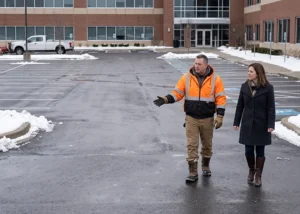
A professional service may be the best choice when a property has large paved areas, heavy traffic, recurring drainage issues, or several places where ice tends to form.
Commercial properties and residential communities often need more than a single pass with a plow. Parking spaces, sidewalks, entryways, private roads, and access lanes may all require different equipment or treatment.
It is also wise to seek help when temperatures are expected to rise and fall around the freezing point. These conditions can cause cleared areas to become icy again later.
A winter service provider can assess the property, identify priority areas, and create a plan for plowing, ice removal, salting, pretreatment, and follow-up visits.
Don’t Let Winter Weather Win
The freeze and thaw method can turn small cracks and minor drainage problems into unsafe ice, broken pavement, and expensive spring repairs.
Timely snow removal, proper drainage, pavement care, and well-planned ice treatment can help protect the property.
Stay ahead of winter’s toughest conditions. Contact Charlotte Snow Plow today for reliable snow and ice management.
Related Articles: