Keeping a parking lot safe in winter takes more than a quick plow after every storm. Winter parking lot maintenance starts before the first flakes fall and continues all season so that people can walk and drive with confidence. Clear, well-managed lots help your business keep doors open even on the toughest winter days.
Property managers who plan ahead tend to see fewer accidents, fewer complaints, and fewer surprise repair bills once the snow melts.
Winter Parking Lot Maintenance Before the First Storm

Every strong winter parking lot maintenance plan begins long before the forecast calls for a blizzard. Early work gives you time to spot problems, set priorities, and schedule repairs while the weather still cooperates.
A careful walk-through of the lot helps more than any fancy tool. Look for cracks, potholes, uneven spots, and areas where water pools after a rain. Those wet spots often freeze first, which turns a normal parking area into a slip and fall hazard once temperatures drop.
Lighting also deserves a fresh look. Dim fixtures, burned-out bulbs, or dark corners make it harder for drivers to see ice and snow piles. Clear sightlines around entrances, exits, and crosswalks should sit high on the checklist so your team knows where to focus.
Knowing Who Takes Care of Each Parking Area
Before the season ramps up, it helps to clarify who is responsible for each snowy parking lot on the property. Some spaces may fall under the landlord, while others belong to tenants under their leases.
Shared parking areas sometimes create confusion. A short written summary that explains which party handles winter parking area maintenance for each section will reduce finger pointing when the first storm hits. Clear roles mean faster action and fewer disagreements in the middle of the night.
Once responsibilities are set, keep a copy with your snow plow company and maintenance staff. Everyone then works from the same playbook when the phones start ringing.
Building a Simple Plan for a Snowy Parking Lot

A written plan might feel formal at first, but it keeps winter parking lot maintenance decisions from being made on the fly. The document does not need to be long to be helpful.
Many property managers outline a simple order of priorities. Main drive lanes and fire routes usually come first. Accessible parking spaces, loading zones, and high foot traffic areas follow closely behind so customers and staff can reach doors safely.
Storm triggers should appear in writing as well. Decide in advance how many inches of snow will start plowing, when salting begins, and how to handle ice only events. A short plan that covers these basics helps you respond quickly on long winter nights.
Preparing Pavement and Drainage for Cold Weather
Pavement in good shape holds up better through freeze and thaw cycles. Small cracks and shallow potholes rarely stay small once water seeps in and freezes.
Fall is often the time to schedule patching, crack sealing, or even fresh sealcoat in trouble spots. While big projects may need warm weather, many minor repairs still happen in early cold months if the surface is dry.
Drainage deserves equal attention. Low spots, clogged grates, and backed up gutters leave water sitting on the surface. Puddles that linger in October often become sheets of ice in January, especially in shaded corners of the lot.
Marking Obstacles Before the Snow Arrives
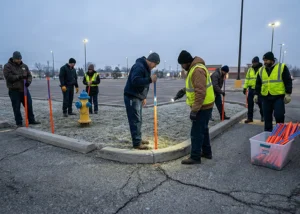
Clear markers help snow crews protect both people and property once snow begins to cover everything. Curbs, wheel stops, islands, fire hydrants, and utility covers are much easier to see with tall stakes or reflective markers in place.
Bright markers also guide operators at night. A plow driver who can see where islands and medians sit is less likely to clip them or pile snow in the wrong place. That extra visibility also helps drivers move more slowly and smoothly through the lot.
Many managers keep a small supply of extra stakes on hand. When a marker gets knocked over during the season, staff can replace it quickly without waiting for another shipment.
Planning Snow Storage and Traffic Flow
Snow has to go somewhere. Without a plan, piles may end up blocking sightlines, covering signs, or taking up prime stalls in front of entrances.
Walk the lot with your snow plow company before the first storm. Talk about where to stack snow so meltwater drains away from doorways and walkways. Corners of the lot, unused areas, or lower priority spaces often work well for storage.
Traffic flow should stay part of the conversation. Tall piles near drive lanes or exits make it harder for drivers to see pedestrians and other cars. Safer choices keep lines of sight open at intersections and crosswalks all season long.
Safer Walking Routes Through a Snowy Parking Lot
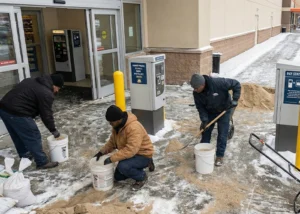
Pedestrians often face the highest risk in a snowy parking lot. Icy patches between stalls, slush at curb ramps, and rough windrows left at crosswalks can all lead to injuries.
Many property managers ask their snow crews to focus on a few key walking routes. Paths from stalls to main entrances, sidewalks near storefronts, and curb ramps near accessible stalls should stay on the high priority list.
Slip resistant surfaces help as well. Timely spot treatment with sand or deicer around building entrances, ticket machines, and pay stations provides extra traction where people stand still and shuffle their feet.
Communication That Keeps People Informed
Even the best winter parking lot maintenance plan will frustrate tenants if no one explains what to expect. Short, clear messages tend to calm nerves on storm days.
Email, text alerts, or notices in lobbies can explain where to park during heavy cleanup, which areas will be plowed first, and how long a full pass usually takes. Simple graphics or maps help people understand the plan at a glance.
Feedback channels matter too. A central phone line or email address for winter parking area maintenance issues keeps reports organized. Staff can then route urgent safety concerns to your snow plow company right away.
Working With a Professional Snow Plow Partner

A strong partnership with a snow contractor supports everything else you put in place. Good communication starts before the first contract is signed.
Clear scope, service triggers, and pricing in the agreement help both sides. The contract should spell out when crews arrive, how often they return during a long storm, and what level of service you expect for weekends and holidays.
Regular check ins after major storms pay off as well. A quick review of what worked, which corners stayed icy, and which piles need to be moved will sharpen performance over the rest of the season.
Heavy Snowfall With Less Stress
Heavy snow will always bring a few surprises, but property managers can choose how prepared their lots will be. With thoughtful winter parking lot maintenance, safer driving lanes, and clear walking routes, a snowy parking lot becomes easier to manage.
Related Articles: